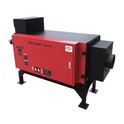
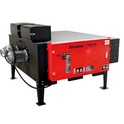
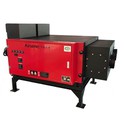
In industrial settings, particularly those dealing with machining and metalworking, the presence of oil mist and other airborne contaminants is a common challenge. A Filter Mist Collector plays a crucial role in maintaining a clean and safe working environment. In a humid environment, the operation of a Filter Mist Collector becomes even more complex and requires a deeper understanding of its working principles. As a supplier of Filter Mist Collectors, I am well - versed in the intricacies of how these devices function in various conditions, especially in humid settings.
Basic Working Principles of a Filter Mist Collector
Before delving into the operation in a humid environment, it's essential to understand the fundamental working principles of a Filter Mist Collector. Generally, a Filter Mist Collector is designed to capture and remove oil mist, smoke, and other fine particles from the air. The process typically involves multiple stages.
The first stage is often a pre - filter. This pre - filter is responsible for capturing larger particles and debris. It acts as a primary barrier, preventing large contaminants from reaching the more delicate components of the collector. For example, in a machining workshop, metal shavings and larger droplets of oil can be caught by the pre - filter.
The next stage usually involves a high - efficiency filter. This filter is designed to capture smaller particles, including fine oil mist. It can be made of various materials, such as fiberglass or synthetic fibers, which are engineered to have a high surface area and a specific pore size to trap the particles effectively.
Some advanced Filter Mist Collectors, like the Electrostatic Oil Mist Collector, use electrostatic principles. In an electrostatic oil mist collector, the oil mist particles are charged as they pass through an ionizing section. Then, they are attracted to oppositely charged collection plates. This technology can achieve a very high collection efficiency, especially for fine particles.
Challenges in a Humid Environment
In a humid environment, several challenges can affect the performance of a Filter Mist Collector. The presence of moisture in the air can have a significant impact on the collection process.
Firstly, moisture can cause the oil mist particles to agglomerate. When water vapor in the air comes into contact with the oil mist, it can form larger droplets. These larger droplets may change the behavior of the oil mist as it passes through the collector. For example, they may be more likely to stick to the pre - filter, causing it to clog more quickly.
Secondly, humidity can affect the electrostatic properties of the collector. In an Electrostatic Coalescer, the presence of moisture can disrupt the electrostatic field. Water molecules are polar, and they can interfere with the charging and collection process of the oil mist particles. This may lead to a decrease in the collection efficiency of the electrostatic collector.
Another challenge is the potential for corrosion. The moisture in the air can cause corrosion of the metal components of the Filter Mist Collector. This not only reduces the lifespan of the collector but can also lead to the release of rust particles into the air, which can further contaminate the working environment.
Adaptations for Humid Environments
To overcome the challenges posed by a humid environment, Filter Mist Collectors need to be designed and adapted accordingly.
One adaptation is the use of hydrophobic filters. Hydrophobic filters are designed to repel water. They prevent the moisture from saturating the filter media, which helps to maintain the filter's efficiency. These filters can be made from materials such as PTFE (polytetrafluoroethylene), which has excellent water - repellent properties.
In addition, the design of the collector can be optimized to prevent the accumulation of moisture. For example, the housing of the collector can be designed with proper drainage channels to allow any condensed water to drain out. This helps to prevent the formation of standing water inside the collector, which can lead to corrosion and other problems.
For electrostatic collectors, special coatings can be applied to the collection plates to reduce the impact of moisture on the electrostatic field. These coatings can help to maintain the stability of the electrostatic charge and improve the collection efficiency even in a humid environment.


Maintenance in a Humid Environment
Proper maintenance is crucial for the effective operation of a Filter Mist Collector in a humid environment.
Regular inspection of the filters is essential. The pre - filter should be checked frequently for clogging. If it is clogged, it should be cleaned or replaced promptly. The high - efficiency filter also needs to be inspected regularly. In a humid environment, the filter may need to be replaced more frequently due to the increased likelihood of clogging and moisture saturation.
The collector's housing and other components should be checked for signs of corrosion. If corrosion is detected, appropriate measures should be taken, such as applying anti - corrosion coatings or replacing the corroded parts.
The electrostatic components, if present, need to be maintained carefully. The ionizing section and the collection plates should be cleaned regularly to ensure that the electrostatic field is functioning properly. Any damage to the electrostatic components should be repaired immediately to avoid a decrease in collection efficiency.
Advantages of Our Filtermist Oil Mist Collectors in Humid Environments
As a supplier, we offer Filtermist Oil Mist Collectors that are specifically designed to perform well in humid environments.
Our collectors are equipped with high - quality hydrophobic filters. These filters not only repel water but also have a high dust - holding capacity. This means that they can effectively capture oil mist and other contaminants even in a humid environment without getting clogged quickly.
The design of our collectors includes advanced drainage systems. These systems ensure that any condensed water is quickly drained out of the collector, preventing the formation of standing water and reducing the risk of corrosion.
We also provide regular maintenance services for our Filtermist Oil Mist Collectors. Our team of experts can perform inspections, cleanings, and repairs to ensure that the collectors are always operating at their best, even in challenging humid conditions.
Conclusion
In conclusion, the operation of a Filter Mist Collector in a humid environment is a complex process that requires a deep understanding of the working principles and the challenges posed by humidity. By using appropriate adaptations, such as hydrophobic filters and proper drainage systems, and by implementing regular maintenance, the performance of the collector can be maintained at a high level.
If you are facing challenges with oil mist and airborne contaminants in a humid industrial environment, our Filtermist Oil Mist Collectors can provide an effective solution. We invite you to contact us to discuss your specific needs and to explore how our products can help you create a cleaner and safer working environment. Our team of experts is ready to assist you in selecting the right Filter Mist Collector for your application and to provide you with the necessary support and maintenance services.
References
- "Industrial Air Filtration Handbook" - A comprehensive guide on air filtration systems, including mist collectors.
- Research papers on the impact of humidity on electrostatic precipitation and filtration processes.
- Manufacturer's documentation for Filter Mist Collectors, which provides detailed information on their design and operation.