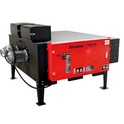
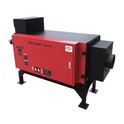
As a supplier of ESP Oil Mist Separators, I often get asked about the power consumption of these devices. Understanding the power consumption of an ESP Oil Mist Separator is crucial for both cost - effectiveness and energy efficiency in industrial settings. In this blog, I'll delve into the factors that influence the power consumption of an ESP Oil Mist Separator, provide some real - world examples, and discuss how to optimize it.
How an ESP Oil Mist Separator Works
Before we discuss power consumption, it's important to understand how an ESP Oil Mist Separator operates. An ESP, or Electrostatic Precipitator, uses an electrostatic field to remove oil mist and particulate matter from industrial exhaust gases. The process starts when the contaminated air enters the separator. Inside, high - voltage electrodes create an electrostatic field that charges the oil mist particles. These charged particles are then attracted to oppositely charged collection plates, where they accumulate and are eventually removed.


Factors Affecting Power Consumption
- Size and Capacity: Larger ESP Oil Mist Separators with higher capacities generally consume more power. This is because they need to generate a stronger electrostatic field to handle a greater volume of air and more oil mist particles. For example, a large - scale industrial ESP designed to handle thousands of cubic meters of air per hour will require more power compared to a smaller unit used in a workshop.
- Voltage and Current: The power consumption of an ESP is directly related to the voltage and current applied to the electrodes. Higher voltages and currents are needed to create a stronger electrostatic field, which can lead to increased power consumption. However, a stronger field also results in more efficient particle collection.
- Airflow Rate: The rate at which air passes through the ESP affects power consumption. A higher airflow rate requires more energy to maintain the electrostatic field and ensure proper particle collection. If the airflow is too high, the particles may not have enough time to be charged and collected, leading to reduced efficiency and potentially higher power consumption to compensate.
- Particle Concentration: The concentration of oil mist particles in the incoming air also plays a role. If the air contains a high concentration of particles, the ESP needs to work harder to collect them all. This may require higher voltages and currents, increasing power consumption.
Real - World Power Consumption Examples
Let's look at some real - world scenarios to better understand the power consumption of ESP Oil Mist Separators.
In a small - scale machining workshop, a compact ESP Oil Mist Separator with a capacity of around 1000 cubic meters per hour might consume approximately 0.5 - 1 kilowatt of power. This unit is designed to handle the relatively low volume of oil mist generated by a few CNC machines.
On the other hand, in a large automotive manufacturing plant, an industrial - grade ESP with a capacity of 10,000 cubic meters per hour or more could consume 5 - 10 kilowatts or even more. These large - scale separators are required to handle the high volume of oil mist and particulate matter generated by multiple production lines.
Optimizing Power Consumption
As a supplier, I understand the importance of helping our customers optimize the power consumption of their ESP Oil Mist Separators. Here are some strategies:
- Proper Sizing: Selecting the right - sized ESP for your application is crucial. An oversized unit will consume more power than necessary, while an undersized unit may not be able to handle the workload efficiently. Our team can help you determine the appropriate size based on your specific requirements.
- Regular Maintenance: Keeping the ESP clean and well - maintained is essential. Over time, the collection plates can become coated with oil and particulate matter, which can reduce the efficiency of the electrostatic field and increase power consumption. Regular cleaning and inspection can help maintain optimal performance.
- Variable Frequency Drives (VFDs): Installing VFDs can help adjust the power consumption of the ESP based on the actual airflow and particle concentration. This allows the separator to operate at a lower power level when the demand is low, resulting in energy savings.
Related Products
If you're interested in other air purification solutions, we also offer Electrostatic Coalescer, Heat Treatment Fume Purifier, and Mist Collector for Cnc Machines. These products are designed to meet different industrial needs and can work in conjunction with our ESP Oil Mist Separators for comprehensive air purification.
Conclusion
Understanding the power consumption of an ESP Oil Mist Separator is essential for industrial facilities looking to reduce operating costs and improve energy efficiency. By considering factors such as size, voltage, airflow rate, and particle concentration, and implementing optimization strategies, you can ensure that your ESP operates at its most efficient level.
If you're interested in learning more about our ESP Oil Mist Separators or other air purification products, or if you're ready to discuss a purchase, we're here to help. Contact us to start a conversation about how our solutions can meet your specific needs.
References
- Brown, R. C. (2015). Industrial Air Pollution Control Technology Handbook. CRC Press.
- Cooper, C. D., & Alley, F. C. (2011). Air Pollution Control: A Design Approach. Waveland Press.