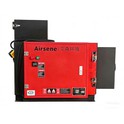
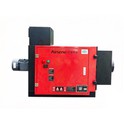
The identification of electrostatic purifiers (mainly referring to electrostatic dust collection air purifiers) can be comprehensively judged in the following ways:
View product model and logo: According to the Chinese national standard "Air Purifier" (GB/T 18801-2022), the purification principle code in the product model can directly determine the type The inclusion of the letter "D" in the model number indicates that the device is an electrostatic purifier
In addition, if the product manual, body label or official promotional page clearly marks keywords such as "electrostatic dust collection", "high-voltage static electricity", and "electrostatic adsorption", it is also an electrostatic purifier
Observe the internal structure and working principle: The core components of an electrostatic dust collection purifier include a high-voltage ionization zone and a dust collection plate (usually a set of metal plates or grids with positive and negative charges) rather than a physical screen
It charges airborne particles through a high-voltage electric field and adsorbs them on the dust collector
Some models have metal rod-like electrodes visible inside, which are the "heart" parts that generate high-voltage static electricity
Confirm if it is equipped with an ionizer: Electrostatic dust collection technology often works in tandem with an ionizer (releasing positive/negative ions) to enhance the charging effect of particulate matter
If the product promotion emphasizes functions such as "releasing negative ions" and "ion purification", its core principle is likely to be based on electrostatic dust collection
Pay attention to the ozone generation characteristics: electrostatic purifiers will inevitably convert oxygen (O₂) in the air into ozone (O₃) during the high-voltage discharge process
If the product description mentions "ozone-free" or "ozone elimination technology", it should be carefully verified as ozone is a byproduct of how it works
The national standard stipulates that the ozone concentration limit is ≤5×10⁻⁶%, and you can pay attention to the third-party test report when purchasing
Distinguish between "electrostatic type" and "filtration type": electrostatic purifiers do not need to replace HEPA filters or activated carbon filters, and their dust collection plates can be washed and reused, which is one of their main selling points
If the equipment advertises "no filter element" or "washable electrode", it is very likely to be electrostatic. On the contrary, if it relies on regular filter replacement, it belongs to the filter type or compound type
Be cautious of "combined" models: Many modern purifiers have a composite design, i.e. they contain both an electrostatic dust collection module and a physical filter (such as HEPA).
These models are marked with "F" (composite) and still produce ozone in the electrostatic part, but the filter can help adsorb some of the pollutants
It is necessary to clearly distinguish between the functions and risks of its electrostatic modules
Dec 06, 2025
How to identify electrostatic purifiers
Send Inquiry