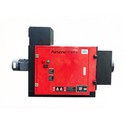
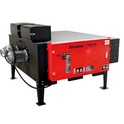
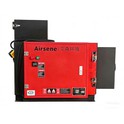
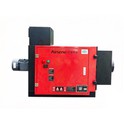
Centrifugal working principle: Generate negative pressure through the fan to draw the air containing oil mist into the equipment. The oil mist particles collide and coalesce under the action of the high-speed rotating wind wheel, forming large droplets. These droplets are thrown against the inner wall of the equipment or intercepted on the efficient filtration material under the action of centrifugal force, thus separating from the air. The separated oil is collected and recycled through the return port, and the clean air is expelled
Typical Applications: Suitable for all kinds of dry and wet oil mist and dust situations, with mature technology and stable working performance
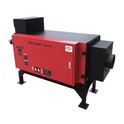
Electrostatic Working Principle: After the oil mist air enters the equipment, it first passes through a charged zone, where the oil mist particles are given a positive charge. Subsequently, the charged particles move towards the collection plate with opposite polarity under the action of strong electric field force and adhere to its surface to achieve the separation of oil mist from air. The oil on the collection plate is regularly cleaned and recycled, and the purified air is discharged
Typical applications: It is especially suitable for dry environments with extremely high filtration accuracy and high dust concentration, but it is not suitable for oil mist with high humidity to prevent electrical breakdown
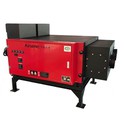
Condensing working principle: The negative pressure generated by the high-speed rotating impeller is used to suck in the oil mist, and the small droplets in the oil mist condense into larger oil droplets in the collision and are collected. For tiny oil mist particles that are still in the gaseous state, the equipment liquefies them back into oil recovery by means of a condensing element. The remaining oil mist components are then intercepted by multi-stage high-efficiency filtration materials and finally discharged clean air
Dec 20, 2025
Working principle of machined oil mist collector
Previous
No Information
Send Inquiry