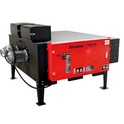
In industrial workshops, safety is of paramount importance, and one significant risk that often goes unnoticed is the potential for fires. Oil mist, a common by - product in many manufacturing processes, can significantly increase the risk of fire. As a supplier of Filtermist Oil Mist Collectors, I am here to explore how these devices can effectively reduce the risk of fire in the workshop.
The Fire Hazard of Oil Mist in Workshops
Oil mist is generated during various industrial operations such as machining, metalworking, and lubrication processes. When oil is atomized into tiny droplets and suspended in the air, it forms a highly flammable environment. These fine oil droplets can easily ignite if they come into contact with an ignition source, such as a spark from a machine, an overheated electrical component, or even static electricity.
The presence of oil mist in the workshop also poses a threat to the integrity of the equipment. Over time, oil mist can accumulate on machinery, electrical panels, and other surfaces. This build - up not only reduces the efficiency of the equipment but also creates a fire hazard. A small spark in an area with a thick layer of oil - coated surfaces can quickly lead to a large - scale fire.
How Filtermist Oil Mist Collectors Work
Filtermist Oil Mist Collectors are designed to effectively capture and remove oil mist from the air in the workshop. These collectors use a combination of mechanical and filtration techniques to separate the oil droplets from the air.
The first stage of the collection process typically involves a pre - filter. This pre - filter captures the larger oil droplets and solid particles, preventing them from entering the main filtration system. The pre - filter also helps to extend the life of the main filter by reducing the amount of debris that it has to handle.
The main filter in the Filtermist Oil Mist Collector is usually a high - efficiency filter that can capture even the smallest oil droplets. The filter media is designed to have a large surface area, which allows for maximum contact with the oil mist. As the air passes through the filter, the oil droplets are trapped on the filter media, and the clean air is then released back into the workshop.
Reducing the Fire Risk
One of the primary ways that Filtermist Oil Mist Collectors reduce the risk of fire is by removing the flammable oil mist from the air. By reducing the concentration of oil mist in the workshop, the likelihood of an ignition event is significantly decreased. With less oil mist in the air, there are fewer fuel sources available for a fire to start and spread.


In addition to removing the oil mist from the air, Filtermist Oil Mist Collectors also help to prevent the build - up of oil on surfaces. By continuously capturing the oil mist, the collectors ensure that the machinery, electrical panels, and other surfaces in the workshop remain clean and free from oil deposits. This reduces the risk of a fire starting due to an ignition source coming into contact with an oil - coated surface.
Case Studies and Scientific Evidence
Numerous case studies have shown the effectiveness of Filtermist Oil Mist Collectors in reducing the fire risk in workshops. For example, in a metal machining workshop, the installation of Filtermist Oil Mist Collectors led to a significant reduction in the number of fire incidents. Before the installation, the workshop had experienced several small fires due to the presence of oil mist. After the collectors were installed, the frequency of fire incidents decreased to almost zero.
Scientific research also supports the use of oil mist collectors in fire prevention. Studies have shown that reducing the concentration of oil mist in the air can significantly lower the flammability of the environment. By removing the oil mist, the lower explosive limit (LEL) of the air in the workshop is increased, making it less likely for a fire to occur.
Other Benefits of Filtermist Oil Mist Collectors
Apart from reducing the fire risk, Filtermist Oil Mist Collectors offer several other benefits. They improve the air quality in the workshop, which is beneficial for the health of the workers. Breathing in oil mist can cause respiratory problems, skin irritation, and other health issues. By removing the oil mist from the air, the collectors create a safer and healthier working environment.
The collectors also help to improve the efficiency of the machinery. When oil mist is removed from the air, the machinery operates more smoothly, and the maintenance requirements are reduced. This can lead to cost savings in the long run, as there is less wear and tear on the equipment.
Comparison with Other Solutions
There are other methods of dealing with oil mist in the workshop, such as using exhaust fans or air purifiers. However, these solutions are often less effective than Filtermist Oil Mist Collectors. Exhaust fans simply move the oil mist from one area to another, without actually removing it from the air. Air purifiers may be able to capture some of the oil mist, but they are not as efficient as the Filtermist collectors, especially when it comes to capturing the smallest oil droplets.
Conclusion
In conclusion, Filtermist Oil Mist Collectors are an effective solution for reducing the risk of fire in the workshop. By removing the flammable oil mist from the air and preventing the build - up of oil on surfaces, these collectors create a safer working environment. They also offer additional benefits such as improved air quality and increased machinery efficiency.
If you are interested in learning more about how Filtermist Oil Mist Collectors can benefit your workshop, or if you are looking to purchase these collectors, please feel free to contact us. We are happy to provide you with more information and assist you in finding the right solution for your specific needs.
References
-
Industrial Fire Safety Handbook, Third Edition, by George W. Vance
-
Occupational Safety and Health Administration (OSHA) guidelines on oil mist control in the workplace
-
Research papers on the effectiveness of oil mist collectors in fire prevention published in industrial safety journals