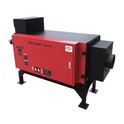
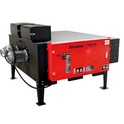
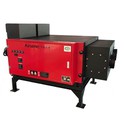
Hey there! As a supplier of Filter Mist Collectors, I've seen firsthand how important it is to have an effective mist collection system in industrial settings. In this blog post, I'm going to compare Filter Mist Collectors with other mist collection methods to help you understand why our product stands out.
How Filter Mist Collectors Work
First off, let's talk about how Filter Mist Collectors work. These devices are designed to capture and remove oil mist, coolant mist, and other types of industrial aerosols from the air. They use a combination of filters to trap the mist particles, preventing them from being released back into the workplace.
The basic principle is simple. The mist-laden air is drawn into the collector through an inlet. As it passes through the filters, the mist particles are captured, and clean air is then released back into the environment. The filters can be made from various materials, such as fiberglass, polyester, or activated carbon, depending on the specific application and the type of mist being collected.
Comparing with High Efficiency Electrostatic Oil Mist Collectors
Now, let's compare Filter Mist Collectors with High Efficiency Electrostatic Oil Mist Collectors. Electrostatic collectors use an electrostatic charge to attract and capture mist particles. They work by ionizing the mist particles, which then adhere to charged plates or collectors.
One of the main advantages of electrostatic collectors is their high efficiency in capturing fine mist particles. They can remove a large percentage of sub-micron particles, which can be difficult to capture with traditional filter-based collectors. However, they also have some drawbacks.
Electrostatic collectors are generally more expensive to purchase and maintain. They require regular cleaning of the charged plates to maintain their efficiency, and they can be sensitive to changes in humidity and temperature. In addition, they may produce ozone as a byproduct, which can be a health hazard in high concentrations.
On the other hand, Filter Mist Collectors are more cost-effective and easier to maintain. They don't require any electrical components or complex cleaning procedures. The filters can be easily replaced when they become clogged, and they are less sensitive to environmental conditions. While they may not be as efficient as electrostatic collectors in capturing extremely fine particles, they are still very effective in removing most types of industrial mist.
Comparing with Filtermist Oil Mist Collectors
Another popular type of mist collection system is Filtermist Oil Mist Collectors. Filtermist collectors are known for their high-quality construction and reliable performance. They use a combination of mechanical and filtration methods to capture oil mist.
Filtermist collectors are designed to be compact and easy to install. They can be mounted directly on the machine tool or in a central location in the workplace. They are also very efficient in removing oil mist, and they can help to improve air quality and reduce the risk of fire and explosion in the workplace.
However, like electrostatic collectors, Filtermist collectors can be more expensive than Filter Mist Collectors. They also require regular maintenance, including filter replacement and cleaning. In addition, they may not be as effective in capturing other types of mist, such as coolant mist or water-based mist.


Comparing with Centralized Oil Mist Extractors
Finally, let's compare Filter Mist Collectors with Centralized Oil Mist Extractors. Centralized extractors are large-scale systems that are designed to collect mist from multiple sources in a factory or industrial facility. They use a network of ducts and pipes to draw the mist-laden air from the machines and transport it to a central collection unit.
One of the main advantages of centralized extractors is their ability to handle large volumes of mist. They can be very effective in industrial settings where there are multiple machines producing mist. However, they are also very expensive to install and maintain. They require a significant amount of space and infrastructure, and they may not be suitable for smaller facilities.
Filter Mist Collectors, on the other hand, are more flexible and can be used in a variety of applications. They can be easily installed on individual machines or in small groups, and they are more cost-effective for smaller facilities. They also require less maintenance and can be easily moved or reconfigured as needed.
Why Choose Filter Mist Collectors
So, why should you choose Filter Mist Collectors over other mist collection methods? Here are some of the key reasons:
- Cost-Effective: Filter Mist Collectors are generally more affordable than other types of mist collection systems. They require less upfront investment and have lower operating costs.
- Easy to Maintain: The filters in Filter Mist Collectors can be easily replaced, and they don't require any complex cleaning procedures. This makes them very easy to maintain and reduces downtime.
- Flexible: Filter Mist Collectors can be used in a variety of applications and can be easily installed on individual machines or in small groups. They are also more suitable for smaller facilities.
- Effective: Filter Mist Collectors are very effective in removing most types of industrial mist, including oil mist, coolant mist, and water-based mist. They can help to improve air quality and reduce the risk of health problems in the workplace.
Conclusion
In conclusion, Filter Mist Collectors offer a cost-effective, easy-to-maintain, and flexible solution for mist collection in industrial settings. While other mist collection methods, such as electrostatic collectors, Filtermist collectors, and centralized extractors, have their own advantages, Filter Mist Collectors are a great choice for many applications.
If you're interested in learning more about our Filter Mist Collectors or would like to discuss your specific mist collection needs, please don't hesitate to get in touch. We'd be happy to help you find the right solution for your business.