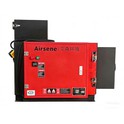
Hey there! As a supplier of CNC oil mist collectors, I often get asked about the oil recovery rate of these machines. It's a pretty crucial question, whether you're running a small workshop or a big industrial operation. So, let's dive right in and break down what this oil recovery rate is all about.
First off, what exactly is the oil recovery rate? Simply put, it's the percentage of oil that a CNC oil mist collector can capture and recycle from the air. In a CNC machining environment, a lot of oil gets turned into mist during the cutting and cooling processes. This oil mist not only contains valuable lubricants but can also be a health hazard if it's left floating around in the air. That's where our CNC oil mist collectors come in.
The oil recovery rate can vary quite a bit depending on several factors. One of the most significant factors is the type of collector you're using. There are different types on the market, like centrifugal collectors, filter - based collectors, and electrostatic precipitators. Each type has its own way of capturing oil mist, and thus, different recovery rates.
Centrifugal collectors work by using the principle of centrifugal force. The oil - laden air is spun at high speeds, and the heavier oil droplets are forced to the outer edges and then collected. These collectors are pretty efficient at capturing larger oil droplets, but when it comes to the really fine mist, their recovery rate might not be as high. They're great for applications where the oil droplets are relatively big and where you need a cost - effective solution.
Filter - based collectors, on the other hand, use a series of filters to trap the oil mist. The filters can be made of different materials, like fiberglass, polyester, or metal mesh. These collectors can have a high recovery rate, especially if they're properly maintained. The key is to change the filters regularly to ensure that they don't get clogged. A clogged filter will reduce the airflow and, in turn, lower the oil recovery rate.
Electrostatic precipitators are a bit more high - tech. They use an electrostatic charge to attract and collect the oil mist particles. These collectors are known for their high efficiency in capturing even the tiniest oil droplets. However, they can be more expensive to install and maintain compared to the other types.
Another factor that affects the oil recovery rate is the size of the oil droplets. In a CNC machining process, the size of the oil droplets can range from a few micrometers to several hundred micrometers. Smaller droplets are harder to capture, so collectors that are designed to handle fine mist will generally have a higher recovery rate.
The airflow rate also plays a role. If the airflow through the collector is too high, the oil droplets might not have enough time to be captured. On the other hand, if the airflow is too low, the collector might not be able to handle the volume of oil mist generated in the machining process. So, it's important to choose a collector with the right airflow capacity for your specific application.
Now, let's talk about why the oil recovery rate matters. For one thing, it's a matter of cost - savings. By recovering and recycling the oil, you can reduce your oil consumption. In a large - scale industrial operation, this can add up to significant savings over time.
It's also an environmental concern. Oil mist in the air can contribute to air pollution and can have a negative impact on the health of your employees. By using a CNC oil mist collector with a high recovery rate, you're not only saving money but also doing your part to create a cleaner and safer working environment.
If you're in the market for a CNC oil mist collector, you might also be interested in our other products. We offer Industrial Air Purifiers for Smoke that can help remove smoke and other airborne contaminants from your workplace. Our Industrial Smoke Purifier is designed to handle heavy - duty smoke removal, ensuring that the air in your facility is clean and fresh. And for those who use vacuum pumps, our Vacuum Pump Oil Mist Separator can prevent oil from being released into the atmosphere.
So, what kind of oil recovery rate can you expect from our CNC oil mist collectors? Well, depending on the model and the specific application, we can offer recovery rates of up to 99%. That's right, almost all of the oil mist can be captured and recycled. Our team of experts can help you choose the right collector for your needs and ensure that it's installed and maintained properly to achieve the best possible oil recovery rate.


If you're interested in learning more about our CNC oil mist collectors or any of our other products, don't hesitate to reach out. We're here to help you find the best air purification solutions for your business. Whether you're looking to improve the air quality in your workshop or save on oil costs, we've got you covered.
Contact us today to start a conversation about your specific requirements. We'll be happy to provide you with more information, answer any questions you might have, and even offer a free consultation. Let's work together to make your workplace cleaner, safer, and more cost - effective.
References
- "Industrial Air Filtration Handbook", John Wiley & Sons
- "Air Pollution Control: A Design Approach", Prentice Hall