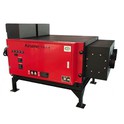
Hey there! As a supplier of oil mist collectors, I often get asked about how to adjust the airflow rate of these nifty machines. It's a crucial aspect that can significantly impact the performance and efficiency of your oil mist collector. So, let's dive right in and explore the ins and outs of adjusting the airflow rate.
First off, let's understand why adjusting the airflow rate is so important. An oil mist collector's main job is to capture and remove oil mist and fumes from the air in industrial settings. If the airflow rate is too low, the collector won't be able to effectively capture all the contaminants, leading to poor air quality and potential health risks for workers. On the other hand, if the airflow rate is too high, it can waste energy and put unnecessary strain on the collector's components, reducing its lifespan.
Now, let's talk about the different methods you can use to adjust the airflow rate of your oil mist collector. One of the most common ways is by adjusting the fan speed. Most oil mist collectors come with a variable speed fan that allows you to control the airflow rate. By increasing the fan speed, you can increase the airflow rate, and vice versa. This is a simple and effective way to fine-tune the performance of your collector based on your specific needs.
Another way to adjust the airflow rate is by adjusting the damper. The damper is a device that controls the amount of air that enters the collector. By opening or closing the damper, you can increase or decrease the airflow rate. This method is particularly useful if you need to adjust the airflow rate based on the size of the workspace or the amount of oil mist being generated.


In addition to adjusting the fan speed and the damper, you can also adjust the airflow rate by changing the filter. The filter is an essential component of the oil mist collector, as it captures the oil mist and fumes. Over time, the filter can become clogged with contaminants, which can reduce the airflow rate. By replacing the filter regularly, you can ensure that the collector is operating at its optimal performance.
Now, let's take a look at some of the factors you need to consider when adjusting the airflow rate of your oil mist collector. One of the most important factors is the size of the workspace. If you have a large workspace, you may need to increase the airflow rate to ensure that all the contaminants are captured. On the other hand, if you have a small workspace, you may be able to reduce the airflow rate to save energy.
Another factor to consider is the type of oil mist being generated. Different types of oil mist have different properties, and some may require a higher airflow rate to be effectively captured. For example, if you're working with a high-viscosity oil, you may need to increase the airflow rate to ensure that the oil mist is captured before it settles on surfaces.
Finally, it's important to consider the noise level of the oil mist collector. If the airflow rate is too high, the collector may produce a lot of noise, which can be a nuisance for workers. By adjusting the airflow rate to the optimal level, you can ensure that the collector is operating quietly and efficiently.
In conclusion, adjusting the airflow rate of your oil mist collector is an important aspect of maintaining its performance and efficiency. By using the methods and factors discussed in this blog, you can fine-tune the airflow rate to meet your specific needs and ensure that your workspace is clean and safe.
If you're in the market for an oil mist collector, be sure to check out our Industrial Smoke Purification Unit, Filter Mist Collector, and Filtermist Oil Mist Collectors. These products are designed to provide high-performance air purification solutions for industrial settings.
If you have any questions or need further assistance, please don't hesitate to contact us. We're here to help you find the right oil mist collector for your needs and ensure that it's operating at its best.
References:
- Industrial Ventilation: A Manual of Recommended Practice, American Conference of Governmental Industrial Hygienists (ACGIH)
- Air Pollution Control: A Design Approach, Theodore, L., & Buonicore, A. J.
- Handbook of Air Pollution Technology, Stern, A. C., et al.