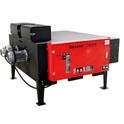
Picking the right size of an ESP (Electrostatic Precipitator) Oil Mist Separator for your application can feel like a real head - scratcher. But don't worry, I'm here to break it down for you. As a supplier of ESP Oil Mist Separators, I've seen it all, and I'm going to share some tips to help you make the best choice.
Understanding Your Needs
First things first, you've got to understand what your application actually requires. Are you dealing with light oil mist, heavy fumes, or something in between? Different industrial processes generate different levels of oil mist and fumes. For example, a metalworking shop that uses a lot of cutting fluids will produce a significant amount of oil mist. On the other hand, a food processing plant might have a lighter mist situation.
You also need to consider the size of the area where the oil mist is being generated. A large factory floor will need a more powerful ESP Oil Mist Separator compared to a small workshop. Think about the volume of air that needs to be cleaned. If you have a high - volume production line, the separator has to be able to handle a large amount of air flow.
Factors Affecting Size Selection
There are a few key factors that play a big role in determining the right size of the ESP Oil Mist Separator.
Airflow Rate
The airflow rate is super important. It's measured in cubic feet per minute (CFM). You need to know how much air is moving through the space where the oil mist is present. To figure this out, you can use some basic calculations. Measure the dimensions of the room (length, width, and height) and then calculate the volume. Then, based on the type of operation, you can estimate how many air changes per hour are needed. For instance, a high - risk area might need 10 - 15 air changes per hour, while a less - critical area could get by with 3 - 5.
Once you know the volume of the room and the number of air changes per hour, you can calculate the required airflow rate. For example, if you have a room that's 1000 cubic feet and you need 5 air changes per hour, the airflow rate would be (1000 cubic feet x 5 air changes) / 60 minutes = 83.33 CFM.
Oil Mist Concentration
The concentration of oil mist in the air is another crucial factor. If the oil mist is very dense, you'll need a more powerful separator. You can measure the oil mist concentration using a particle counter. High - concentration situations, like in some heavy manufacturing processes, will require a larger ESP Oil Mist Separator with a higher collection efficiency.
Type of Oil
Different types of oil have different properties. Some oils are more viscous, while others are lighter. Viscous oils are harder to separate from the air, so you might need a bigger separator. For example, in a lubricant manufacturing plant where thick oils are used, the ESP Oil Mist Separator needs to be sized appropriately to handle the more challenging separation process.
Sizing Guidelines
Based on the factors we've discussed, here are some general sizing guidelines.
For small workshops or areas with low - volume oil mist generation, a separator with an airflow rate of 50 - 200 CFM might be sufficient. These are often used in small machine shops or hobbyist areas.
Medium - sized industrial applications, like medium - scale metalworking or food processing plants, usually need separators with an airflow rate of 200 - 1000 CFM. These can handle a moderate amount of oil mist and fumes.
Large industrial facilities, such as large automotive manufacturing plants or heavy - duty metal fabrication shops, require separators with an airflow rate of over 1000 CFM. These high - capacity separators can handle the large volumes of air and high concentrations of oil mist.


Benefits of the Right Size
Getting the right size of the ESP Oil Mist Separator is not just about functionality; it also has some great benefits.
Energy Efficiency
A properly sized separator will use energy more efficiently. If you have an oversized separator, it will consume more energy than necessary. On the other hand, an undersized separator won't be able to clean the air effectively, and you might end up with oil mist and fumes still in the air.
Cost - Effectiveness
In the long run, choosing the right size can save you money. You won't have to pay for unnecessary equipment, and you'll also save on energy costs. Plus, a well - sized separator will have a longer lifespan, reducing the need for frequent replacements.
Air Quality
The most important benefit is improved air quality. A correctly sized ESP Oil Mist Separator will remove the oil mist and fumes from the air, creating a healthier working environment for your employees. This can also help you meet environmental regulations.
Related Products
If you're still not sure about the right size or if you're looking for other solutions, we also offer related products like Industrial Fume Purifier, Industrial Smoke Purifier, and Oil Fume Purifier. These products can complement your ESP Oil Mist Separator and provide a more comprehensive solution for your air purification needs.
Contact Us for a Custom Solution
Choosing the right size of an ESP Oil Mist Separator can be complex, but you don't have to do it alone. Our team of experts is here to help you. We can assess your specific application, take into account all the factors we've discussed, and recommend the perfect size for your needs.
If you're interested in learning more or discussing your requirements, don't hesitate to reach out. We're ready to work with you to find the best solution for your industrial air purification needs.
References
- "Industrial Air Pollution Control Technology Handbook" by Theodore, L., & Reynolds, J.
- "Air Pollution Control: A Design Approach" by Stern, A. C., & Hoelscher, T. J.