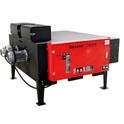
When it comes to the operation of CNC machines, one crucial aspect that often gets overlooked is the management of oil mist. CNC oil mist collectors play a vital role in maintaining a clean and healthy working environment by capturing and removing oil mist generated during machining processes. However, the effectiveness of these collectors is significantly influenced by their installation height. In this blog post, as a supplier of CNC oil mist collectors, I will delve into the factors that determine the optimal installation height of a CNC oil mist collector and provide some practical guidelines.
Understanding the Importance of Installation Height
The installation height of a CNC oil mist collector is not a matter of arbitrary choice. It directly impacts the collector's ability to capture oil mist effectively. If the collector is installed too high, it may not be able to capture the oil mist close to the source, resulting in poor collection efficiency. On the other hand, if it is installed too low, it may interfere with the operation of the CNC machine or be exposed to potential damage.
Factors Affecting the Installation Height
1. Source of Oil Mist
The first factor to consider is the source of the oil mist. In a CNC machining process, oil mist is typically generated at the cutting tool and workpiece interface. The closer the collector is to this source, the better it can capture the oil mist. Therefore, the installation height should be determined based on the location of the oil mist source. For example, if the oil mist is generated at a relatively low position on the CNC machine, the collector should be installed at a lower height to ensure effective capture.

2. Airflow Patterns
Airflow patterns in the workshop also play a significant role in determining the installation height. The movement of air can carry the oil mist away from the source, and the collector needs to be positioned in a way that it can intercept the oil mist-laden air. In general, the collector should be installed in the path of the airflow, where it can capture the oil mist before it spreads throughout the workshop. For instance, if there is a natural draft in the workshop, the collector should be installed in the direction of the draft to take advantage of the airflow.
3. Machine Configuration
The configuration of the CNC machine itself can also affect the installation height. Some CNC machines have complex structures or moving parts that may limit the available space for installing the collector. In such cases, the installation height needs to be adjusted to ensure that the collector does not interfere with the machine's operation. Additionally, the size and shape of the machine can influence the dispersion of oil mist, which in turn affects the optimal installation height.
4. Type of Oil Mist Collector
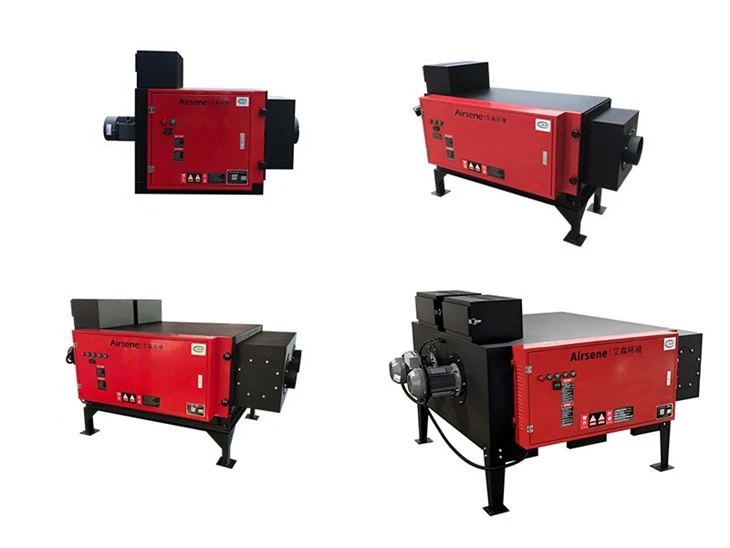
Different types of CNC oil mist collectors have different installation requirements. For example, Electrostatic Smoke Purifier works by using an electrostatic field to capture oil mist particles. These collectors are often more effective when installed at a certain height to optimize the electrostatic interaction with the oil mist. Similarly, Machine Tool Oil Mist Separator and Electrostatic Ionic Air Purifier have their own characteristics that need to be considered when determining the installation height.
Practical Guidelines for Installation Height
1. General Rule of Thumb
As a general guideline, the CNC oil mist collector should be installed as close as possible to the source of the oil mist without interfering with the operation of the CNC machine. A common recommendation is to install the collector within 30 to 60 centimeters (12 to 24 inches) above the oil mist source. This allows the collector to capture the oil mist before it has a chance to disperse into the surrounding air.
2. Customization Based on Machine and Workshop Conditions
However, the optimal installation height may vary depending on the specific machine and workshop conditions. In some cases, it may be necessary to conduct a site survey to determine the best installation height. This can involve measuring the airflow patterns, the location of the oil mist source, and the available space for installation. Based on the survey results, the installation height can be customized to meet the specific needs of the workshop.
3. Consideration of Maintenance and Accessibility
In addition to the installation height, it is also important to consider the maintenance and accessibility of the collector. The collector should be installed in a location where it can be easily accessed for cleaning, filter replacement, and other maintenance tasks. This ensures that the collector can operate effectively over a long period of time.
Conclusion
The installation height of a CNC oil mist collector is a critical factor that affects its performance and effectiveness. By considering the source of oil mist, airflow patterns, machine configuration, and the type of collector, you can determine the optimal installation height for your workshop. As a supplier of CNC oil mist collectors, we are committed to providing high-quality products and professional advice to help you achieve the best results. If you are interested in purchasing a CNC oil mist collector or have any questions about installation, please feel free to contact us for further discussion and negotiation.
References
- [1] "Industrial Air Pollution Control Handbook", John Wiley & Sons, Inc.
- [2] "CNC Machining Technology", Prentice Hall.