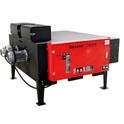
The textile industry is a significant part of the global economy, known for its large - scale production of various fabrics and clothing items. With the increasing awareness of environmental protection and worker health, the question of whether an industrial smoke purifier can be used in the textile industry has become a hot topic. As a supplier of industrial smoke purifiers, I'd like to delve into this issue in detail.
The Challenges in the Textile Industry
The textile manufacturing process involves multiple steps such as spinning, weaving, dyeing, and finishing. Each of these steps can generate different types of pollutants. For example, during the dyeing process, high - temperature dyeing machines release a large amount of steam and fumes containing dyes, chemicals, and volatile organic compounds (VOCs). These fumes not only have a pungent odor but also pose a threat to the environment and the health of workers.


In the spinning and weaving workshops, fine dust particles are generated from the fibers. These dust particles can cause respiratory problems for workers if inhaled over a long period. Moreover, the accumulation of dust in the workshop can also affect the normal operation of machinery, reducing production efficiency and increasing maintenance costs.
How Industrial Smoke Purifiers Work
Industrial smoke purifiers are designed to remove pollutants from the air. They typically use a combination of filtration, adsorption, and electrostatic precipitation technologies.
Filtration is the most basic method. The purifier uses different types of filters, such as pre - filters, HEPA filters, and activated carbon filters. The pre - filter can capture large particles, while the HEPA filter can remove fine dust particles as small as 0.3 microns with a high efficiency. Activated carbon filters are used to adsorb VOCs and odors.
Electrostatic precipitation is another important technology. In this process, the pollutants in the air are charged and then attracted to the collection plates. This method is very effective in removing particulate matter and some gaseous pollutants.
Suitability of Industrial Smoke Purifiers in the Textile Industry
- Particle Removal
- The fine dust particles generated in the textile industry can be effectively removed by industrial smoke purifiers. The pre - filters can first capture the larger fiber fragments, and then the HEPA filters can further filter out the smaller dust particles. This helps to keep the air in the workshop clean and reduces the risk of respiratory diseases among workers.
- VOC and Odor Control
- The dyeing and finishing processes in the textile industry produce a large amount of VOCs and unpleasant odors. Industrial smoke purifiers with activated carbon filters can adsorb these VOCs and odors, improving the air quality in the workshop. For example, some advanced industrial smoke purifiers can reduce the concentration of VOCs by more than 90%, creating a more comfortable working environment.
- Protection of Machinery
- By removing dust and pollutants from the air, industrial smoke purifiers can also protect the machinery in the textile workshop. Dust accumulation on the machinery can cause wear and tear, reduce the efficiency of the equipment, and even lead to breakdowns. A clean air environment can extend the service life of the machinery and reduce maintenance costs.
Types of Industrial Smoke Purifiers for the Textile Industry
- Industrial Fume Extractor
- An Industrial Fume Extractor is a type of purifier that is specifically designed to extract fumes and dust from the air. It can be installed near the source of pollution, such as the dyeing machines or spinning equipment. This type of extractor can quickly capture and remove the pollutants, preventing them from spreading in the workshop.
- Mist Collector for Cnc Machines
- Although the textile industry may not use CNC machines as extensively as the manufacturing industry, there are still some automated processes that may generate mist. A Mist Collector for Cnc Machines can be used to collect the mist generated during these processes. It can effectively remove oil mist and water mist, improving the air quality in the workshop.
- Machine Tool Oil Mist Separator
- In some textile machinery, such as spinning frames, there may be oil lubrication systems that generate oil mist. A Machine Tool Oil Mist Separator can separate the oil mist from the air, preventing the oil from spreading in the workshop and reducing the risk of fire.
Benefits of Using Industrial Smoke Purifiers in the Textile Industry
- Health and Safety
- By removing pollutants from the air, industrial smoke purifiers protect the health of workers. Workers are less likely to suffer from respiratory diseases, allergies, and other health problems caused by inhaling pollutants. This can also reduce absenteeism and improve productivity.
- Environmental Protection
- The textile industry is one of the major polluters. Using industrial smoke purifiers can reduce the emission of pollutants into the environment, helping the industry to meet environmental regulations. This is not only beneficial for the environment but also for the long - term development of the textile industry.
- Improved Product Quality
- A clean air environment can also improve the quality of textile products. Dust and pollutants in the air can contaminate the fabrics, affecting their appearance and quality. By using industrial smoke purifiers, the risk of product contamination is reduced, resulting in higher - quality products.
Case Studies
There are many successful cases of using industrial smoke purifiers in the textile industry. For example, a large - scale textile factory in Asia installed industrial smoke purifiers in its dyeing and spinning workshops. After the installation, the air quality in the workshops improved significantly. The concentration of dust and VOCs decreased, and the workers reported less discomfort. Moreover, the factory also noticed a reduction in machinery breakdowns and an improvement in product quality.
Considerations for Choosing an Industrial Smoke Purifier
- Pollution Source and Concentration
- Different textile processes generate different types and concentrations of pollutants. For example, the dyeing process may generate more VOCs, while the spinning process may generate more dust. Therefore, it is necessary to choose a purifier that is suitable for the specific pollution source and concentration.
- Purification Efficiency
- The purification efficiency of the purifier is an important factor. It is necessary to choose a purifier with high - efficiency filters and advanced purification technologies to ensure that the pollutants can be effectively removed.
- Capacity and Size
- The capacity and size of the purifier should be selected according to the size of the workshop and the amount of pollutants generated. A purifier with insufficient capacity may not be able to effectively purify the air, while a purifier that is too large may be a waste of resources.
Conclusion
In conclusion, industrial smoke purifiers can be effectively used in the textile industry. They can remove dust, VOCs, and other pollutants from the air, protect the health of workers, improve the environment, and enhance product quality. As a supplier of industrial smoke purifiers, we offer a variety of products, including Industrial Fume Extractor, Mist Collector for Cnc Machines, and Machine Tool Oil Mist Separator.
If you are in the textile industry and are interested in improving the air quality in your workshop, we are here to help. Our team of experts can provide you with professional advice and customized solutions. Please feel free to contact us to discuss your specific needs and start the procurement process.
References
- Smith, J. (2020). Air Pollution Control in the Textile Industry. Environmental Science Journal.
- Brown, A. (2019). The Impact of Industrial Smoke Purifiers on Workplace Health. Occupational Health Magazine.
- Green, C. (2021). Textile Manufacturing and Environmental Sustainability. Textile Research Quarterly.